Turning your head, reading, driving and sleeping can become difficult when your neck is painful or stiff. During a home visit, I look at the movements and daily tasks that matter to you rather than assuming every sore neck needs the same stretch.
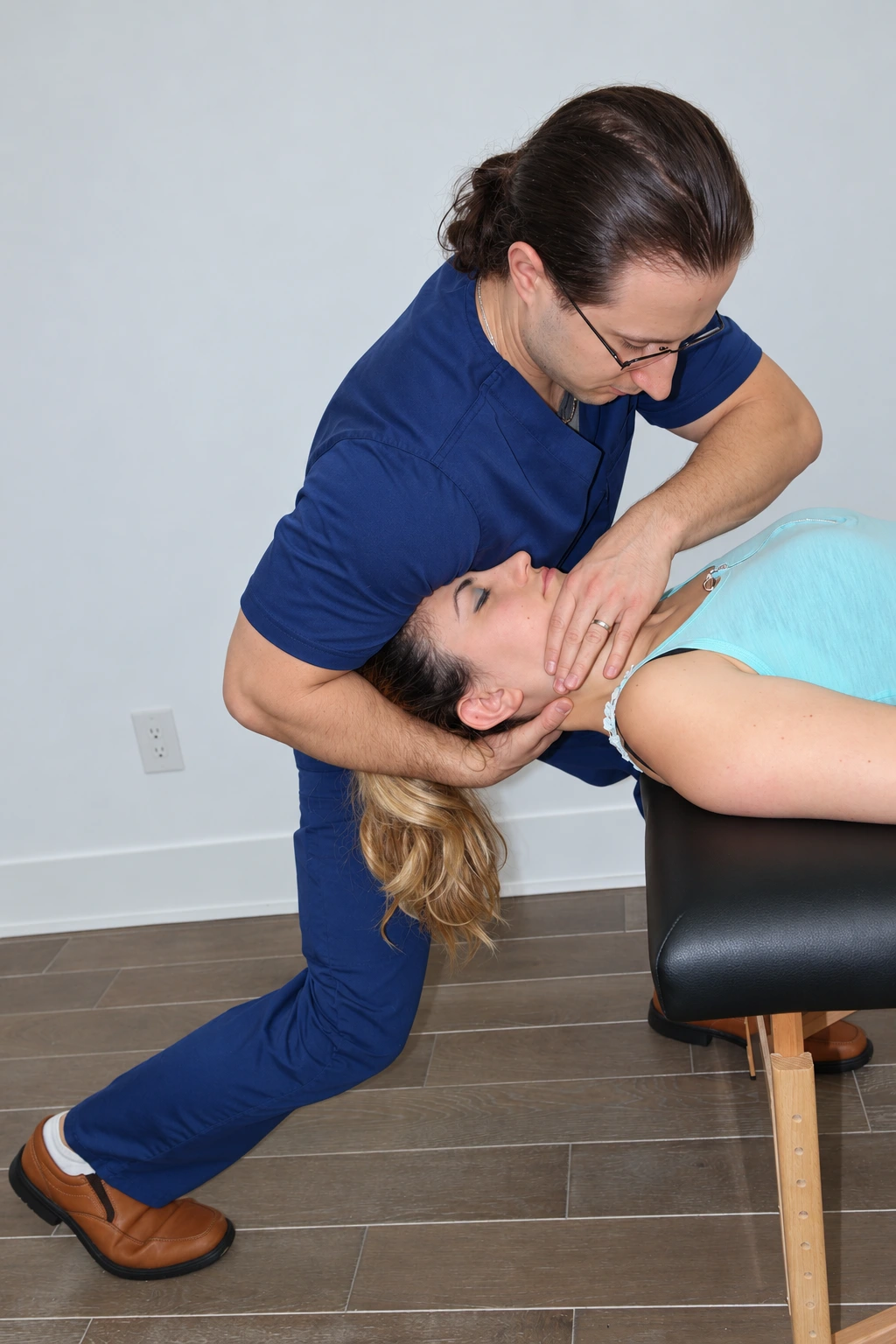
Neck pain and arm symptoms need different questions
Neck pain can have several contributors. Pain, tingling or numbness extending into an arm can involve nerve irritation, but that pattern alone does not establish the cause. I ask where symptoms travel, whether you notice weakness or hand changes, and what activities affect them. The assessment may include neck and shoulder movement, strength and relevant neurological or nerve-provocation testing.
Screen first, then classify the movement problem
Clinical guidelines emphasize screening for serious pathology and matching treatment to the presentation. New progressive neurological loss, major trauma, systemic illness or other concerning findings change the plan and may require medical evaluation rather than simply adding exercises.
Stay active with an individualized plan
For many nonsurgical neck conditions, guidelines support remaining active and using exercise, education and—when appropriate—manual therapy as part of care. I may also assess symptom response to repeated movements using McKenzie principles. A movement is useful when your response supports it; there is no universal direction to force.
Make the home setup work for you
We can review reading position, chair support, sleep setup and the way you reach or turn. The home program should be manageable and should carry over into daily function rather than becoming a collection of unrelated stretches.
When another assessment is needed
New or worsening arm weakness, increasing hand clumsiness, marked gait or balance change, or other significant neurological change needs prompt medical assessment. Tell me if an assigned movement consistently increases symptoms farther down the arm so we can reassess.
Research behind this article
Neck-pain clinical practice guidelines support screening for serious pathology, advice to remain active, and appropriately selected exercise. Depending on the presentation, multimodal care and manual therapy may be used alongside exercise. Evidence for individual interventions varies, particularly for cervical radiculopathy, so treatment should be matched to the examination and response.
Discuss care at home with Dr. Lenny
I provide one-on-one physical therapy at home in Ivyland, Warminster and nearby communities. Call or text Dr. Lenny: 267-647-9097.
General education; your exercise plan and medical restrictions should be based on an individual assessment.