Fracture Recovery at Home: Protect Healing While Rebuilding Daily Movement

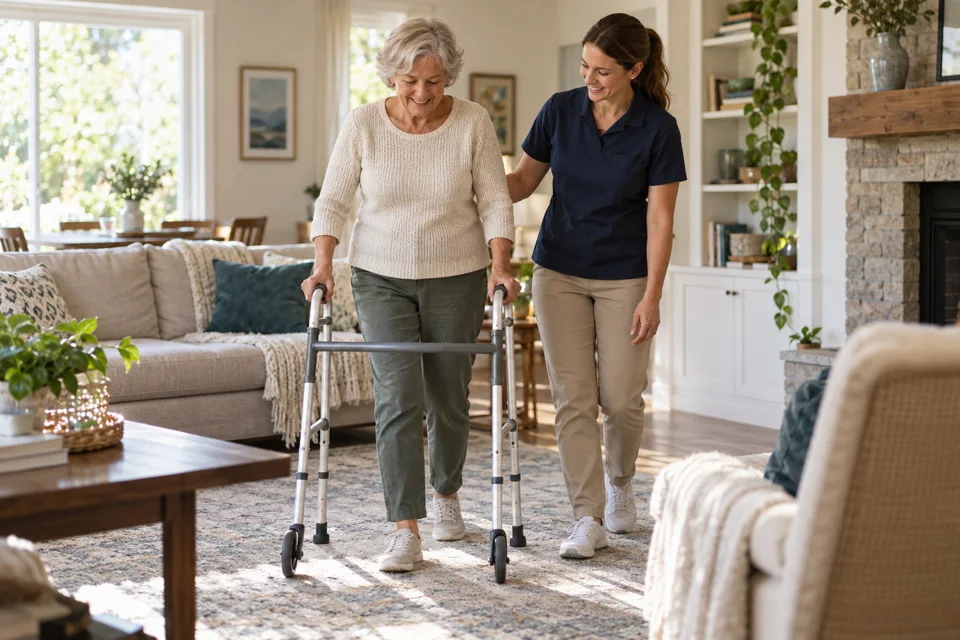
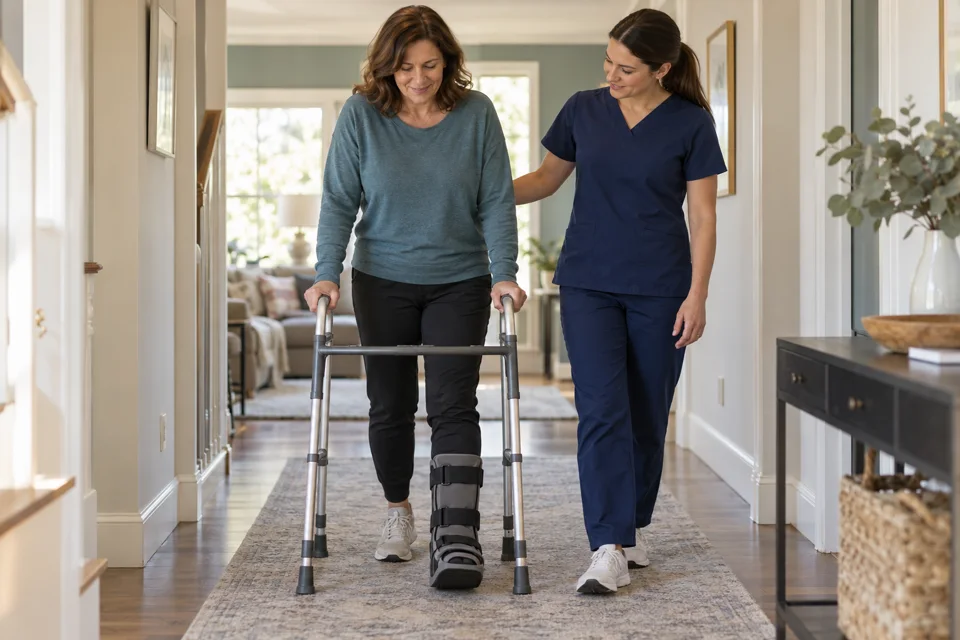
Illustration of walker practice during fracture recovery
Illustration of supported walking with a walking boot during fracture recovery
Illustrative scene of care at home.

A fracture can change how you dress, get out of a chair or move through your home. The right rehabilitation plan depends on which bone was injured, how it was treated and the restrictions from your orthopedic clinician.

The restriction comes before the exercise

Weight-bearing, lifting and movement permissions differ across fractures and stages of healing. I review your instructions and coordinate questions with the treating team. Less pain, a removable brace or an elapsed number of weeks does not automatically mean the bone is ready for more load.

Protect the injury during everyday tasks

In a home visit, I can assess transfers, steps and the walking support you need. A wrist injury may affect your ability to push through a walker; a leg fracture may require a different transfer setup. We practice a version that respects the actual restriction rather than using one recovery routine for every fracture.

Build back as the plan allows

Movement, strength and balance work progress when permitted and according to your response. I also consider the strength and confidence lost during inactivity. Useful goals may include safer bathroom access, a manageable walking route or getting dressed with less difficulty.

Keep follow-up and fall prevention connected

Attend orthopedic follow-up and report new numbness, worsening pain or changes in the injured limb. If a fall caused the fracture, we can review balance and the home environment; ask your medical provider whether bone-health assessment is indicated. For wrist-specific guidance, see the existing broken-wrist article.

Discuss care at home with Dr. Lenny

I provide one-on-one physical therapy at home in Ivyland, Warminster and nearby communities in Bucks County, Montgomery County and Northeast Philadelphia. We can discuss your goals, location and whether this service fits your needs.

Call or text Dr. Lenny: 267-647-9097

General education; your exercise plan and medical restrictions should be based on an individual assessment.

Sources and further reading

Fracture-specific loading and movement restrictions come from the treating orthopedic team. When a low-trauma fracture, osteoporosis or fall risk is relevant, rehabilitation may also include bone-health and fall-risk assessment within the appropriate medical plan.
APTA Geriatrics: Physical therapist management of suspected or confirmed osteoporosis (opens in a new tab)

APTA Geriatrics: Physical therapy management of fall risk in community-dwelling older adults (opens in a new tab)

AAOS: Distal radius fractures (opens in a new tab)

Movement During and After Cancer Treatment: A Personal Home Rehabilitation Plan

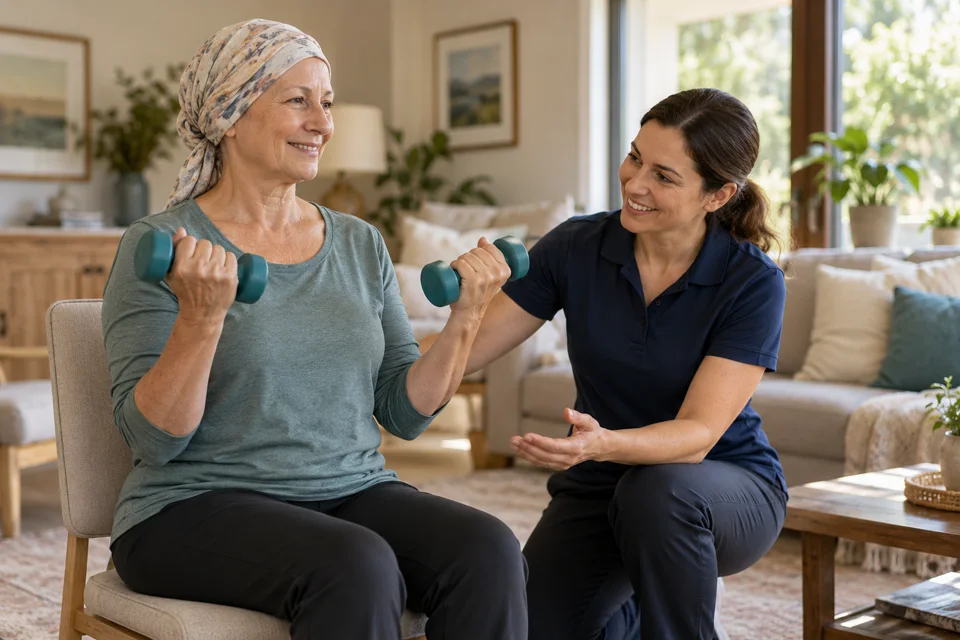
Illustration of gentle seated exercise during cancer rehabilitation
Illustrative scene of care at home.

Cancer treatment can change energy, strength, balance and the effort required for everyday activities. Rehabilitation at home can help maintain or rebuild function while respecting the medical plan and how you are responding to treatment.

Begin with the medical picture

I consider treatment stage, symptoms, blood counts or other medical issues when relevant, and instructions from the oncology team. Bone metastases, fractures, surgery, neuropathy and cardiopulmonary effects can substantially change what exercise is appropriate. A routine that was comfortable before treatment may need a different starting point.

Exercise is generally encouraged, but it must fit the person

Major cancer-exercise guidance supports physical activity during and after treatment when medically appropriate. Aerobic and resistance exercise can improve several outcomes, including physical function and cancer-related fatigue, but exercise is not a cancer treatment and more effort is not automatically better.

Make activity manageable

An appropriate plan may involve short walking or aerobic bouts, supported movement, selected strengthening and practice of everyday transfers. I adjust duration, resistance, support and rest to the day you are having and to the response afterward.

Bone involvement requires special attention

Known or suspected bone metastases, significant focal bone pain or fracture risk require coordination with the medical team before loading the involved area. The goal is to preserve useful activity without treating a generic exercise recommendation as more important than the oncology or orthopedic restrictions.

Coordinate changes in symptoms

Tell your oncology team about important new or worsening fatigue, pain or other symptoms. New focal bone pain deserves assessment before adding load. Seek urgent help for chest pain, severe unexpected breathlessness or sudden neurological symptoms.

Research behind this article

This article reflects major cancer-exercise recommendations from the American College of Sports Medicine and oncology guidance supporting appropriately prescribed aerobic and resistance exercise during and after cancer treatment. Exercise should be individualized around treatment effects, medical status, bone health and functional goals.

Discuss care at home with Dr. Lenny

I provide one-on-one physical therapy at home in Ivyland, Warminster and nearby communities. Call or text Dr. Lenny: 267-647-9097.

General education; your oncology and medical restrictions take priority.

Parkinson’s Mobility at Home: Walking, Turns and Everyday Confidence

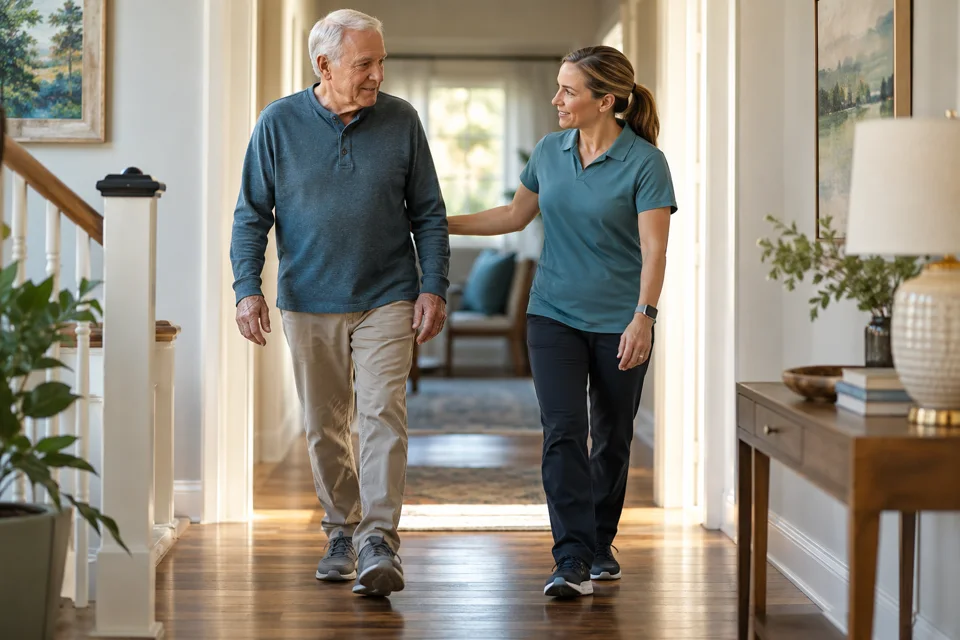
Illustration of supervised walking practice for Parkinson’s mobility
Illustration of supervised walking practice at home
Illustrative scene of care at home.

Parkinson’s can make starting a walk, turning in a doorway, getting out of a chair and maintaining activity more difficult. During a home visit, I look at where movement becomes challenging and choose practical goals with you and, when helpful, your caregiver.

Look at movement in your own space

I may assess step length, turning, balance, transfers, freezing and the support you use. We discuss falls, fatigue and whether movement changes across your medication schedule. I do not change medication; that information helps us plan activity and communicate with your medical team when needed.

Exercise is a core part of Parkinson’s rehabilitation

The APTA Parkinson disease clinical practice guideline supports aerobic exercise, resistance training, balance training, external cueing, gait training and task-specific practice when appropriately selected. The exact combination depends on the person. Physical therapy should challenge movement enough to be useful while accounting for safety, medical status and day-to-day response.

Use cueing for a reason

Visual, auditory or attentional cues can help some people with gait, freezing or movement amplitude. A cue that helps one person may distract another, so I assess the response rather than giving everyone the same strategy. We can practice the actual chair, hallway, doorway or threshold that matters to you.

Keep support and caregiver instruction part of care

A walker or other aid may be appropriate when walking is unsafe without support. We can review device setup, how assistance is provided and when a task should be supervised. Caregiver instruction focuses on strategies we have practiced rather than unfamiliar balance challenges.

Build activity beyond the therapy visit

Parkinson’s management benefits from regular physical activity, not only the minutes spent with a therapist. When appropriate, I help establish walking, aerobic, strengthening or mobility routines that can continue between visits and evolve over time.

Measure useful changes

Goals may include safer turns, easier chair rises, improved step length, more manageable community walking or a safer trip to the bathroom. Physical therapy supports function, activity and participation; it does not cure Parkinson’s or guarantee that falls will stop.

Research behind this article

The American Physical Therapy Association’s evidence-based clinical practice guideline for Parkinson disease supports multiple forms of exercise and movement training, including aerobic exercise, resistance exercise, balance training, external cueing and gait training. Selection and dosage should be individualized.

Discuss care at home with Dr. Lenny

I provide one-on-one physical therapy at home in Ivyland, Warminster and nearby communities. Call or text Dr. Lenny: 267-647-9097.

General education; your exercise plan and medical restrictions should be based on an individual assessment.

Balance Care at Home: When Lightheadedness Needs Medical Review or Referral

Illustration of seated blood-pressure screening during balance care
Illustrative balance assessment session at home
Illustrative scene of care at home.

My focus is helping you improve balance, walking and everyday mobility at home. When lightheadedness or dizziness affects safe movement, I first clarify what the symptom feels like and whether medical review is needed before making the balance exercises harder.

Describe the symptom and its timing

I ask whether you feel faint, spinning or off balance, and whether symptoms occur when standing, turning your head, walking or changing position. These descriptions guide the assessment but do not diagnose the cause on their own. Dizziness can involve blood-pressure regulation, medications, vestibular conditions, neurological problems and other medical causes.

Check for orthostatic blood-pressure changes when appropriate

Orthostatic hypotension is generally defined as a sustained fall in blood pressure of at least 20 mm Hg systolic or 10 mm Hg diastolic within three minutes of standing or upright tilt. When appropriate within my scope and the situation, I can assess symptoms and vital-sign response to position change and communicate concerns to the medical provider. A single normal reading does not rule out every cause of dizziness.

Do not self-treat a blood-pressure problem by guessing

Medication, hydration, salt intake and compression strategies may matter in some cases, but changes should be coordinated with the appropriate medical professional—particularly when heart, kidney or blood-pressure conditions are present. I do not advise changing prescription medication on your own.

Work on balance within a suitable plan

Once the situation is appropriate for movement practice, I can address strength, transfers, walking support and balance in your home. The setup is selected for your abilities and fall risk. A standing challenge is not the right way to test whether unexplained dizziness will simply go away.

Vestibular symptoms may need specialized assessment

If the presentation suggests an inner-ear or vestibular disorder, I can help direct you toward appropriate evaluation or treatment. Sudden severe dizziness with new weakness, speech difficulty, severe coordination problems or vision changes requires emergency assessment; fainting and new chest pain also require urgent medical attention.

Research behind this article

Current clinical guidance defines classic orthostatic hypotension by the blood-pressure change described above and recommends supine-to-standing assessment when feasible. Persistent symptoms despite normal bedside measurements can require further medical evaluation. Balance rehabilitation should address the person’s actual impairments while unexplained medical causes are appropriately investigated.

Discuss care at home with Dr. Lenny

I provide one-on-one physical therapy at home in Ivyland, Warminster and nearby communities. Call or text Dr. Lenny: 267-647-9097.

General education; dizziness, fainting and blood-pressure concerns can require medical assessment.

Hip and Knee Replacement Recovery: Physical Therapy in Your Home

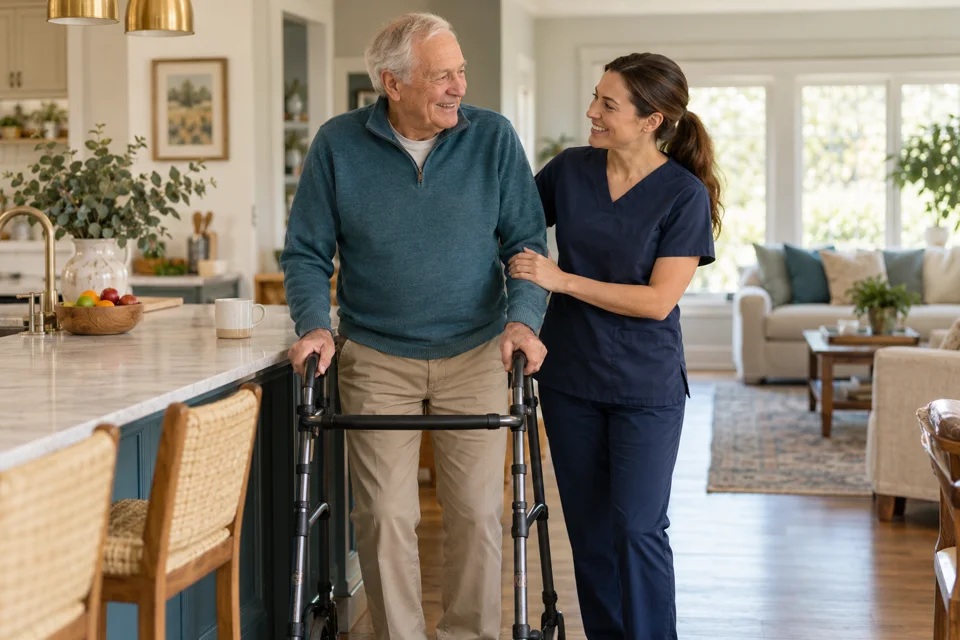
Illustration of walking with a walker during joint-replacement recovery
Illustrative joint replacement rehabilitation session at home
Illustrative scene of care at home.

After hip or knee replacement, rehabilitation needs to work in the place where you get out of bed, use the bathroom, sit down and manage stairs. I bring one-on-one physical therapy to your home and build practice around those daily tasks.

Start with the surgical plan

Procedures, precautions and weight-bearing instructions can differ. I review the surgeon’s instructions, medical status and stage of recovery before choosing exercises. Do not assume a friend’s recovery routine or a general online video applies to your operation.

Early movement and strengthening have a purpose

Rehabilitation after joint replacement commonly includes progressive movement, strengthening, walking and functional training. After total knee replacement in particular, the updated 2026 APTA clinical practice guideline emphasizes evidence-based physical therapist management rather than a one-size-fits-all protocol. Exercise intensity, range, resistance and assistive-device progression should reflect the individual recovery.

Practice the route you actually use

We can assess chair height, bed transfers, bathroom access, steps and use of a walker or cane. Home-based practice can expose barriers that are easy to miss in a clinic and lets us train the tasks you need immediately.

Connect the home program to useful goals

I help you understand the assigned exercise amount and how to report changes in pain, swelling and walking. Goals may include easier chair rises, improved knee or hip function, a more comfortable household route or safer stairs. Recovery is individual; I do not promise a fixed date for walking without support.

Progress without racing the recovery

More exercise is not automatically better. I look for a manageable response and progress challenge as function improves. Significant setbacks, unexpected loss of function or concerns about the surgical site should be communicated rather than simply exercising harder.

Watch for changes that need medical attention

Follow your discharge instructions regarding wound changes, fever and new calf pain or swelling. Sudden shortness of breath or chest pain requires emergency help. Keep surgical follow-up appointments and discuss unexpected setbacks with your care team.

Research behind this article

For total knee arthroplasty, this article reflects the updated 2026 APTA clinical practice guideline for physical therapist management. Rehabilitation recommendations continue to be individualized to the procedure, medical status, functional needs and surgeon-specific restrictions. Hip replacement rehabilitation follows the same principle of procedure-specific, individualized progression rather than copying a generic protocol.

Discuss care at home with Dr. Lenny

I provide one-on-one physical therapy at home in Ivyland, Warminster and nearby communities. Call or text Dr. Lenny: 267-647-9097.

General education; your surgical instructions and individualized medical restrictions take priority.

Ankle Sprain Recovery: Rebuilding Walking, Strength and Confidence

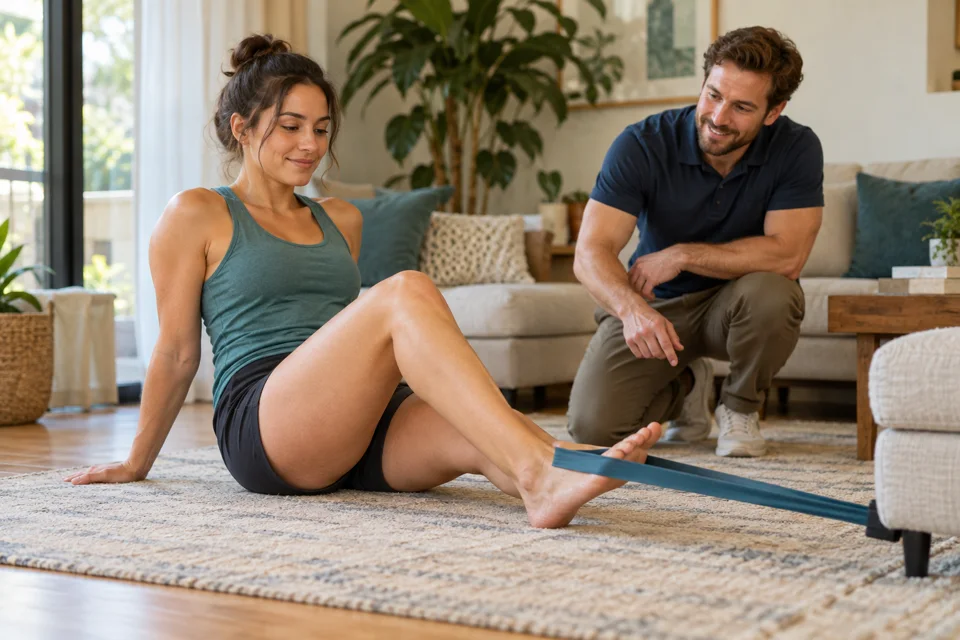
Illustration of ankle rehabilitation with a resistance band
Illustrative ankle rehabilitation session at home
Illustrative scene of care at home.

After an ankle sprain, getting back to comfortable walking involves more than waiting for swelling to settle. I assess the injury, your current support needs and the activities you want to return to.

Check what needs protection first

A sprain injures the ligaments supporting the ankle. A severe sprain can resemble a fracture. Difficulty bearing weight, significant bony tenderness or an injury that is not improving warrants appropriate medical assessment. Existing boot or weight-bearing instructions remain part of the plan.

Early loading is usually progressive, not all-or-nothing

Current ankle-sprain rehabilitation guidelines support external support and progressive weight bearing for many lateral ankle sprains, with the exact approach modified for injury severity and medical instructions. Prolonged immobilization is not automatically better for a routine sprain, while severe injuries may need a short period of protection.

Restore movement, strength and walking in stages

I may assess ankle motion, strength, swelling, walking and balance. Exercise can progress from appropriate mobility and resistance work toward functional loading. The range and load are chosen around the injury and your response rather than a fixed timetable for every sprain.

Train balance and the activity you actually want

Balance and neuromuscular exercise are important parts of rehabilitation and can help reduce recurrent sprains. Returning to uneven ground, hiking or sport requires more than being able to walk across a room. I consider control, confidence, tolerance and how the ankle responds afterward.

Reduce the chance of repeating the problem

A previous sprain increases the risk of another. We can review footwear, home obstacles and an ongoing strength/balance plan. Bracing or taping may be useful in some higher-risk activities, but external support should not be the only rehabilitation strategy.

Research behind this article

This article reflects the JOSPT/APTA clinical practice guideline for lateral ankle ligament sprains, which supports progressive loading, therapeutic exercise and balance/neuromuscular training, with protection and progression matched to injury severity and the individual.

Discuss care at home with Dr. Lenny

I provide one-on-one physical therapy at home in Ivyland, Warminster and nearby communities. Call or text Dr. Lenny: 267-647-9097.

General education; individual injury severity and medical restrictions can change the plan.

Shoulder and Rotator Cuff Pain: Returning to Everyday Reaching

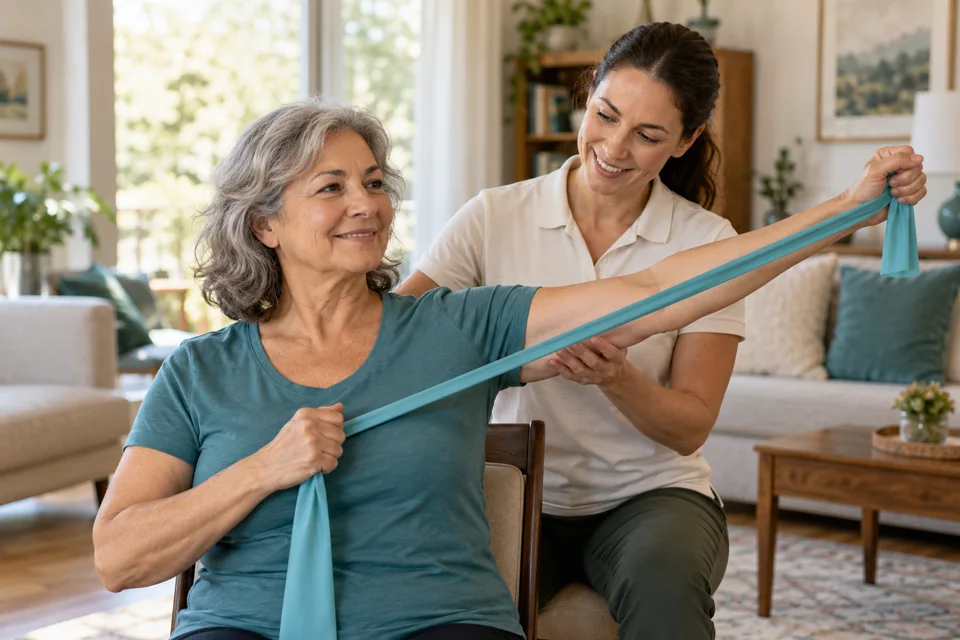
Illustration of guided shoulder exercise at home
Illustration of shoulder care at home
Illustrative scene of care at home.

Dressing, reaching a shelf, exercising or getting comfortable at night can become harder when your shoulder hurts. I start with the task that limits you and assess what the shoulder can do today rather than treating every painful shoulder the same way.

Assess the shoulder and the whole movement

Shoulder symptoms can involve the rotator cuff, joint and other structures; neck-related symptoms can overlap. I ask about injury, weakness, night pain, activity demands and previous treatment, then examine movement and strength. A scan finding or “rotator cuff” label alone does not determine which exercise or load is appropriate.

Exercise is usually the foundation of nonsurgical rehabilitation

The 2025 rotator cuff tendinopathy clinical practice guideline supports active rehabilitation rather than relying only on passive treatment. Depending on the examination, that can include progressive resistance, motor-control or mobility exercise and a graded return to the activities that matter to you.

Make everyday tasks more manageable while rebuilding capacity

In your home, we can try a different reaching height, supported position or way to dress. These adjustments can reduce unnecessary aggravation while we progressively rebuild shoulder capacity. The goal is not indefinite avoidance of arm use.

Progress strength without guessing

I adjust range, support, resistance and volume to your response. Some discomfort during rehabilitation may be manageable, but substantial persistent worsening or loss of function should trigger reassessment. After a surgical repair or fracture, the surgeon’s restrictions take priority over a general exercise progression.

Keep the medical team involved when appropriate

Marked weakness after a sudden injury deserves medical assessment. Persistent severe night pain, progressive weakness or worsening function may warrant further evaluation. Chest discomfort with arm pain, breathlessness or sweating requires urgent medical help.

Research behind this article

This article reflects the 2025 JOSPT clinical practice guideline for diagnosis, nonsurgical medical care and rehabilitation of adults with rotator cuff tendinopathy, including return to function and sport. Exercise selection and progression should still be individualized.

Discuss care at home with Dr. Lenny

I provide one-on-one physical therapy at home in Ivyland, Warminster and nearby communities. Call or text Dr. Lenny: 267-647-9097.

General education; your exercise plan and medical restrictions should be based on an individual assessment.

Lumbar Spinal Stenosis: Making Standing and Walking More Manageable

Illustration of supported walking practice for lumbar spinal stenosis
Illustration of stenosis care at home
Illustrative scene of care at home.

When standing or walking brings on leg symptoms, the goal is to understand your pattern and make the activities you need more manageable. I assess spinal stenosis in the context of your symptoms, examination and medical history.

A scan is part of the picture

Lumbar spinal stenosis means narrowing around nerves in the lower back. Some people notice leg pain, heaviness or numbness during upright activity. The same scan finding does not produce the same limitations in everyone. I ask what brings symptoms on, what eases them and whether there has been a change in strength.

Build walking around your response

During a home visit, I can assess the actual route, steps and resting places you use. Practice may involve shorter bouts, changes to pace and appropriate walking support. I also consider whether symptoms suggest a problem needing medical review rather than assuming all walking discomfort is spinal.

Choose exercises individually

Mobility, strengthening and activity adjustments may help function and symptoms. Your response guides positions and progression; I do not prescribe back extension or flexion to everyone with the same diagnosis. Physical therapy does not remove the anatomical narrowing.

Know when to seek help

New bladder or bowel changes, saddle numbness or rapidly increasing leg weakness require urgent medical assessment. Persistent or worsening limitations should be reviewed with your medical team. We can discuss how home care fits alongside their plan.

Discuss care at home with Dr. Lenny

I provide one-on-one physical therapy at home in Ivyland, Warminster and nearby communities in Bucks County, Montgomery County and Northeast Philadelphia. We can discuss your goals, location and whether this service fits your needs.

Call or text Dr. Lenny: 267-647-9097

General education; your exercise plan and medical restrictions should be based on an individual assessment.

Sources and further reading

AAOS: Lumbar spinal stenosis (opens in a new tab)

Neck Pain and Arm Symptoms: How I Assess Them at Home

Illustration of an adult with neck discomfort at home

Turning your head, reading, driving and sleeping can become difficult when your neck is painful or stiff. During a home visit, I look at the movements and daily tasks that matter to you rather than assuming every sore neck needs the same stretch.

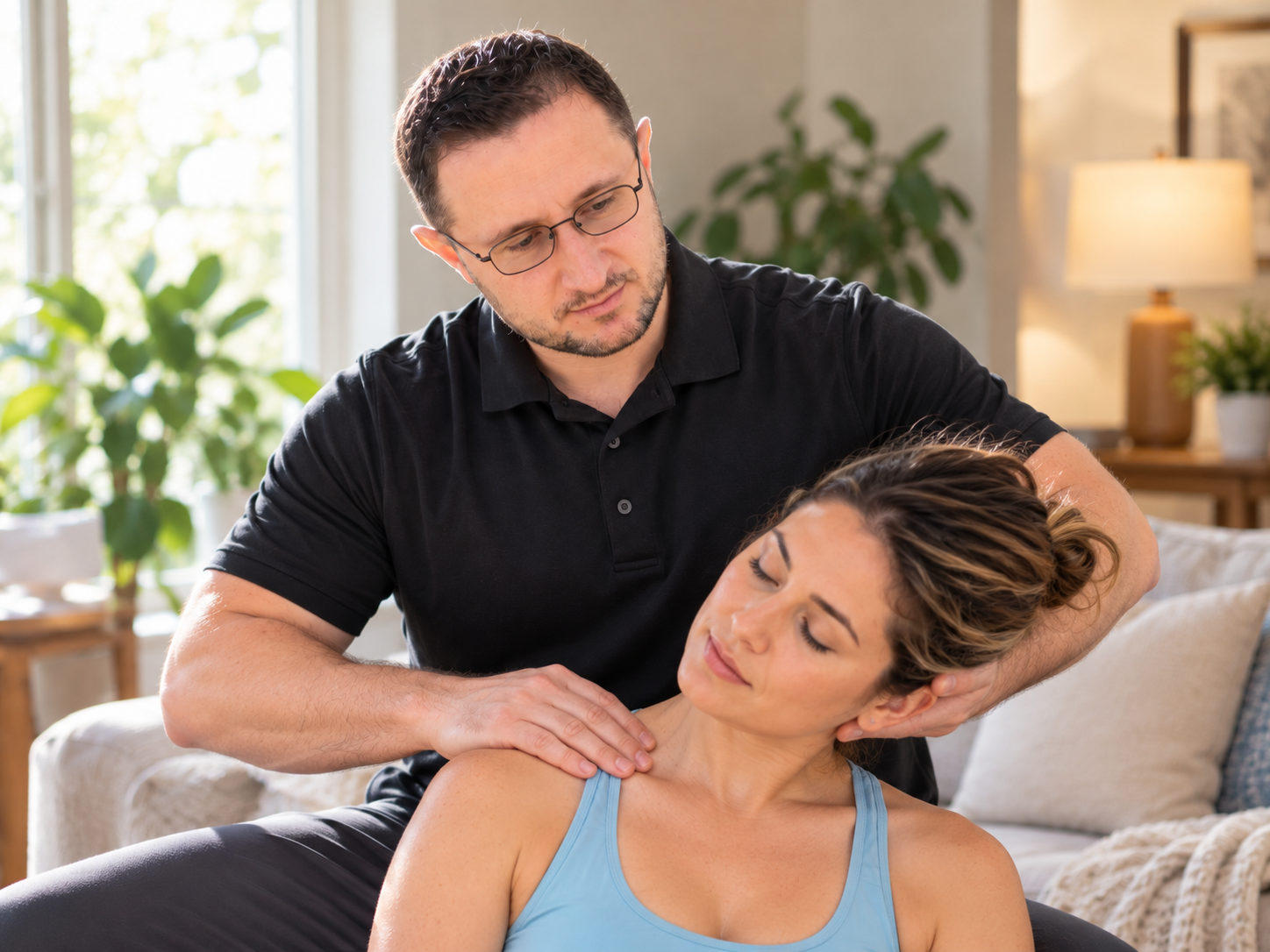
Dr. Lenny providing one-on-one neck and shoulder care during an in-home visit

Neck pain and arm symptoms need different questions

Neck pain can have several contributors. Pain, tingling or numbness extending into an arm can involve nerve irritation, but that pattern alone does not establish the cause. I ask where symptoms travel, whether you notice weakness or hand changes, and what activities affect them. The assessment may include neck and shoulder movement, strength and relevant neurological or nerve-provocation testing.

Screen first, then classify the movement problem

Clinical guidelines emphasize screening for serious pathology and matching treatment to the presentation. New progressive neurological loss, major trauma, systemic illness or other concerning findings change the plan and may require medical evaluation rather than simply adding exercises.

Stay active with an individualized plan

For many nonsurgical neck conditions, guidelines support remaining active and using exercise, education and—when appropriate—manual therapy as part of care. I may also assess symptom response to repeated movements using McKenzie principles. A movement is useful when your response supports it; there is no universal direction to force.

Make the home setup work for you

We can review reading position, chair support, sleep setup and the way you reach or turn. The home program should be manageable and should carry over into daily function rather than becoming a collection of unrelated stretches.

When another assessment is needed

New or worsening arm weakness, increasing hand clumsiness, marked gait or balance change, or other significant neurological change needs prompt medical assessment. Tell me if an assigned movement consistently increases symptoms farther down the arm so we can reassess.

Research behind this article

Neck-pain clinical practice guidelines support screening for serious pathology, advice to remain active, and appropriately selected exercise. Depending on the presentation, multimodal care and manual therapy may be used alongside exercise. Evidence for individual interventions varies, particularly for cervical radiculopathy, so treatment should be matched to the examination and response.

Discuss care at home with Dr. Lenny

I provide one-on-one physical therapy at home in Ivyland, Warminster and nearby communities. Call or text Dr. Lenny: 267-647-9097.

General education; your exercise plan and medical restrictions should be based on an individual assessment.

McKenzie Back and Neck Books: Use Them Alongside Your Personal Plan

McKenzie back and neck books for home physical therapy education
Original illustration: Reading to support your plan
Original illustration, not a product photograph. Confirm the exact item in the retailer listing.

The McKenzie patient books can help you understand a self-management approach and remember advice between visits. They work best as learning resources alongside an individual assessment.

View book options on Amazon →

I may earn a commission, at no extra cost to you. Read the fit and safety guidance below before buying.

Which books to consider

Treat Your Own Back focuses on back-related self-management, while Treat Your Own Neck addresses the neck. OPTP currently advertises the tenth and sixth editions respectively. Check the edition and format in the actual listing before buying.

Read broadly; practice selectively

A book contains options for many readers. Have a clinician assess your symptoms and teach your selected exercises before independent practice. Do not turn every illustrated movement into your routine or assume all McKenzie care involves backward bending.

A good use between visits

Use the book to note questions, revisit education, and discuss what you noticed during the activities already selected for you. I can help connect that reading to your own movement plan during an in-home visit.

When a book is not enough

A book does not diagnose your symptoms, replace medical clearance after injury or surgery, or guarantee improvement. Stop exercises that worsen symptoms and seek advice. This guide is original commentary; it does not reproduce the books’ exercise instructions or illustrations.

Seek emergency care for new loss of bladder or bowel control or numbness around the groin with back pain.

Find product options on AmazonI may earn a commission, at no extra cost to you.

Check the product name, version, seller, and return terms before purchasing. Prices and availability can change. These products are optional tools, not a promise of pain relief.

Need help choosing?

Call or text Dr. Lenny at 267-647-9097 to discuss an individual assessment or visit at home.

Call or text Dr. Lenny: 267-647-9097

Explore the equipment guides · Exercise & Client Tools

Sources and further reading

Manufacturer product information (opens in a new tab)

McKenzie Institute: assessment and products (opens in a new tab)

NHS: symptoms requiring medical attention (opens in a new tab)

As an Amazon Associate I earn from qualifying purchases.

Verified by MonsterInsights