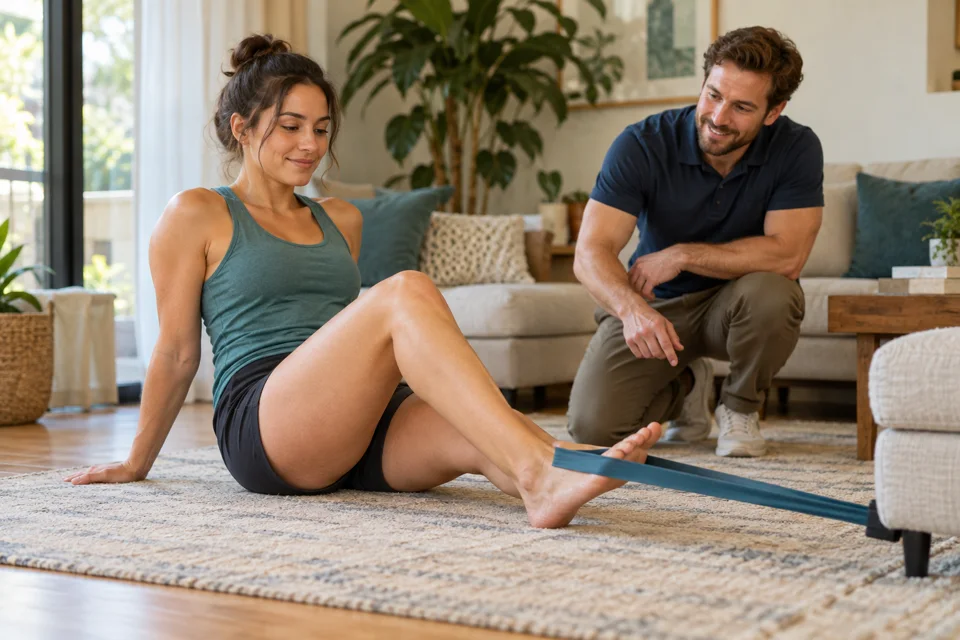
After an ankle sprain, getting back to comfortable walking involves more than waiting for swelling to settle. I assess the injury, your current support needs and the activities you want to return to.
Check what needs protection first
A sprain injures the ligaments supporting the ankle. A severe sprain can resemble a fracture. Difficulty bearing weight, significant bony tenderness or an injury that is not improving warrants appropriate medical assessment. Existing boot or weight-bearing instructions remain part of the plan.
Early loading is usually progressive, not all-or-nothing
Current ankle-sprain rehabilitation guidelines support external support and progressive weight bearing for many lateral ankle sprains, with the exact approach modified for injury severity and medical instructions. Prolonged immobilization is not automatically better for a routine sprain, while severe injuries may need a short period of protection.
Restore movement, strength and walking in stages
I may assess ankle motion, strength, swelling, walking and balance. Exercise can progress from appropriate mobility and resistance work toward functional loading. The range and load are chosen around the injury and your response rather than a fixed timetable for every sprain.
Train balance and the activity you actually want
Balance and neuromuscular exercise are important parts of rehabilitation and can help reduce recurrent sprains. Returning to uneven ground, hiking or sport requires more than being able to walk across a room. I consider control, confidence, tolerance and how the ankle responds afterward.
Reduce the chance of repeating the problem
A previous sprain increases the risk of another. We can review footwear, home obstacles and an ongoing strength/balance plan. Bracing or taping may be useful in some higher-risk activities, but external support should not be the only rehabilitation strategy.
Research behind this article
This article reflects the JOSPT/APTA clinical practice guideline for lateral ankle ligament sprains, which supports progressive loading, therapeutic exercise and balance/neuromuscular training, with protection and progression matched to injury severity and the individual.
Discuss care at home with Dr. Lenny
I provide one-on-one physical therapy at home in Ivyland, Warminster and nearby communities. Call or text Dr. Lenny: 267-647-9097.
General education; individual injury severity and medical restrictions can change the plan.