When Fatigue Changes Your Walking: How I Pace Mobility Practice

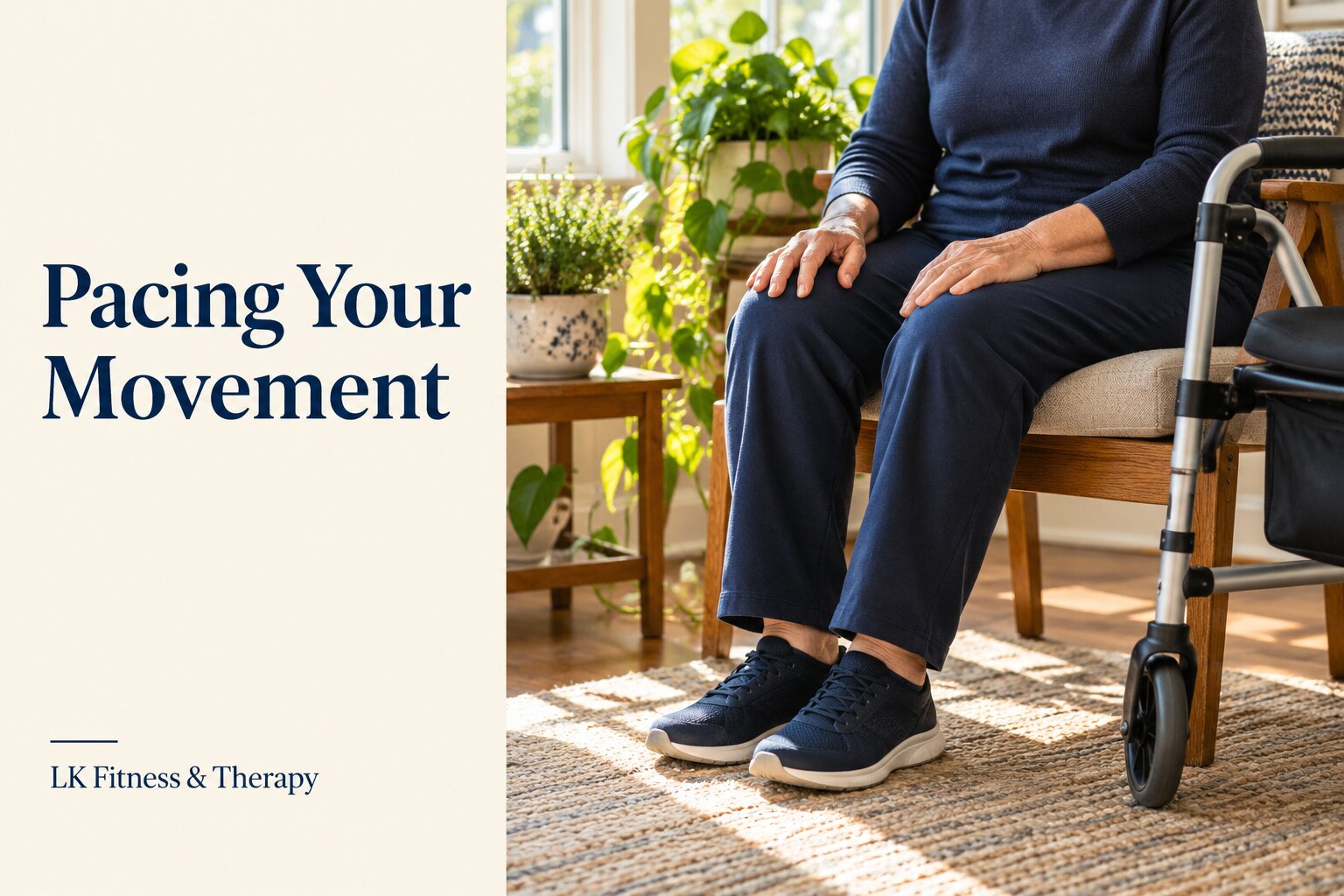
Illustration of a seated rest break with a walker nearby, titled Pacing Your Movement

You may start a walking task with steady steps and find that it becomes harder to control as you tire. During home physical therapy, I pay attention to those changes so we can choose an appropriate amount of practice.

Ask what fatigue feels like

Tiredness, weakness, dizziness, and feeling generally unwell are different experiences. I ask what has changed and how it affects your daily activity. New or unusual symptoms may require medical assessment before we continue.

Watch the quality of movement

During a visit, I may observe step length, balance, use of support, and how you transfer weight as you walk. If the task becomes harder to control, I can reduce the challenge, provide a rest, or stop and reassess. Completing more steps is not the only measure of a useful session.

Build practice around your abilities

CDC guidance recommends choosing the amount and type of activity that fit a person’s abilities and conditions, with a gradual start when needed. I apply that principle by choosing an individual starting point, rather than a fixed walking distance for everyone. CDC guidance on activity and disability.

Plan for the activities that matter

I ask about the tasks you want to keep doing, such as moving around your home or gardening. We can discuss the setup, support, and rest needed for those activities. Your home plan should explain the amount to practice and how to respond when it becomes difficult.

Do not use a normal reading to dismiss symptoms

Blood pressure and pulse are part of the information considered during care; they do not explain every symptom. NHLBI advises talking with a doctor about symptoms such as chest pain or dizziness during physical activity. If you feel newly unwell, tell your clinician before exercising. NHLBI guidance on activity risks.

Use Client Resources for your assigned Medbridge program. This article is general education and does not establish the cause of fatigue or prescribe a walking routine. Talk with Dr. Lenny about personalized mobility care at home. Call 267-647-9097 or text me about your goals. Related reading: Explore balance and mobility practice at home.

Have a question about this article?

I can help you understand how this information relates to your goals, symptoms and home routine.

Call Dr. Lenny at 267-647-9097 or send me a text to discuss whether one-on-one care at home is a good fit.


Hip Arthritis Flares: Staying Active Without Overdoing It

Illustration of an adult seated comfortably with a cane nearby, titled Hip Arthritis and Staying Active

When hip arthritis makes walking or rising from a chair uncomfortable, the plan needs to fit how your hip is responding today. During a home visit, I assess your movement and daily tasks, then help you find a manageable starting point.

Understand the condition and your goals

Hip osteoarthritis can cause pain, stiffness, and difficulty with everyday activities. AAOS describes individualized exercise and walking supports among nonsurgical options for managing function. Physical therapy aims to help with mobility and daily life; it does not promise to reverse arthritis. AAOS hip osteoarthritis guidance.

Adjust the load when the hip is irritable

I may choose a seated or supported position, reduce a movement’s range, or change its duration. If standing on the affected leg is uncomfortable, I assess whether a different setup is more suitable. These are decisions made during your assessment, not a fixed set of exercises for every painful hip.

Keep movement connected to daily life

We can work on getting up, walking within the home, and finding comfortable ways to move. I ask how the hip feels during the activity and afterward. That feedback helps me decide whether to progress, keep the current level, or make a change.

Use walking support when it helps

A cane or walker may be part of your plan. I assess the fit, technique, and support you need. The aim is more manageable mobility, rather than asking you to walk without an aid before you are ready.

Coordinate care when symptoms persist

If pain continues to limit you, I can help you identify questions for your medical team about the diagnosis and next steps. Imaging and treatment decisions need to be considered alongside your symptoms and examination. Your exercise plan can be reviewed as that information becomes available.

Make the home plan manageable

Your exercise amount and frequency should fit your abilities and response. I use Medbridge to provide the instructions we selected together, available through Client Resources. Let me know about flares so we can review the plan.

This is general education, not a patient case report or a prescription for a particular hip problem. Discuss one-on-one physical therapy at home with Dr. Lenny. Call 267-647-9097 or text me about your goals. Related reading: Read how I assess stiffness and restricted movement.

Have a question about this article?

I can help you understand how this information relates to your goals, symptoms and home routine.

Call Dr. Lenny at 267-647-9097 or send me a text to discuss whether one-on-one care at home is a good fit.

Movement Can Be Enjoyable: Balance and Mobility Practice at Home

Illustration of seated ball activity with caregiver support, titled Movement Can Be Enjoyable

Working on mobility does not have to feel like repeating the same drill all visit. During home physical therapy, I may use a simple game or a familiar task to bring variety to practice while keeping the session focused on your goals.

Give each activity a purpose

For someone who enjoys it, a soft-ball activity may provide a way to practice reaching or coordinating movement. For another person, a familiar task such as rising from a chair may be more meaningful. I choose the activity after assessing the person, rather than treating a game as a complete balance program.

Keep support part of the plan

A seated activity, a shorter reach, or a different pace may be the right starting point. Standing activities require an assessment of balance and support needs. I do not ask someone to release their walker to catch a ball unless the setup and their ability make that appropriate.

Build a mix of movement

CDC guidance for older adults includes aerobic activity, muscle strengthening, and balance work, with activity adapted to ability. I use that broad framework while choosing specific practice for your mobility needs and medical precautions. CDC guidance for older adults.

Help caregivers understand the setup

When a caregiver is involved, we can review the chosen exercise, required support, and when to stop. Simple instructions and a familiar routine help everyone understand what has been assigned. A caregiver should follow the plan we reviewed rather than add an unfamiliar standing challenge.

Adjust the pace to the person

I ask about effort and symptoms and adjust the session when a rest or a change of activity is needed. Enjoyment and safety are considered together. The purpose is useful practice that the person understands and wants to participate in.

Explore examples of supervised care, or use Client Resources to open your assigned home program. This article is general education, not instructions to copy a balance activity without assessment. Talk with Dr. Lenny about care at home. Call 267-647-9097 or text me about your goals. Related reading: Read how I adjust walking practice when fatigue changes movement.

Have a question about this article?

I can help you understand how this information relates to your goals, symptoms and home routine.

Call Dr. Lenny at 267-647-9097 or send me a text to discuss whether one-on-one care at home is a good fit.
A Better Workout Starts With the Right Challenge for You

Illustration of seated resistance-band exercise, titled The Right Challenge for You

An exercise can look simple on a screen and feel very different when you try it. During one-on-one fitness and wellness visits, I watch how you perform a movement, listen to your feedback, and adapt the challenge to your starting point.

The exercise name is only the beginning

A movement can be changed by adjusting resistance, speed, range, body position, or support. I may demonstrate it, give a short cue, or choose a different version. The aim is to help you understand and control the task.

Choose a challenge that fits

CDC guidance recognizes that activity intensity depends on fitness, comfort, and health, and recommends choosing activities that fit your abilities. Resistance bands and body-weight movements are among its examples of strengthening activity. That leaves plenty of room to build a useful workout without assuming that jumping or an advanced floor exercise is right for everyone. CDC activity guidance.

Your feedback helps shape the session

Tell me if a movement is confusing, uncomfortable, or harder to control than expected. I can change the setup or pause to review it. A successful visit gives you a clear next step and practice that fits your goals.

Report symptoms during and after exercise

Nausea or vomiting is something to report, not a measure of a good workout. Stop exercising if it occurs, and seek medical advice if it recurs or persists. Vomiting can have several causes; its timing alone does not tell us whether exercise caused it. MedlinePlus advises urgent medical care for severe abdominal pain or difficulty keeping fluids down, and emergency care for blood or coffee-ground material in vomit. MedlinePlus guidance on nausea and vomiting.

Keep practice between visits straightforward

When I assign a home program, I use Medbridge for exercise instructions and videos you can revisit. The GO app also supports reminders and completed-exercise logging. Open your home exercise resources.

This article provides general education and describes my coaching approach. Your workout and any medical precautions should be individualized. Discuss private fitness, wellness, or physical therapy at home with Dr. Lenny. Call 267-647-9097 or text me about your goals. Related reading: See what private fitness at home looks like.

Have a question about this article?

I can help you understand how this information relates to your goals, symptoms and home routine.

Call Dr. Lenny at 267-647-9097 or send me a text to discuss whether one-on-one care at home is a good fit.

Feeling Stiff? How I Help You Rebuild Movement at Home

Illustration of supported seated knee movement, titled Moving Again When You Feel Stiff

When a knee feels difficult to bend or your back feels tight, the next step is an assessment of what limits your movement. In a home visit, I look at comfortable positions, how you move, and the everyday activities you want to do more easily.

Stiffness is a description, not a diagnosis

I ask about the onset of the restriction, pain, swelling, recent illness or injury, and any precautions from your medical team. I compare movements and observe whether support or a change of position helps. A restricted movement can have more than one contributor; I do not assume that it is simply tight muscle or fear.

Start with movement you can control

Depending on the assessment, practice may include supported knee bending, gentle active movement, or strengthening within a suitable range. I choose the position, amount of assistance, and challenge for the individual. AAOS recommends discussing exercise selection with your clinician and raising questions when an exercise causes pain. AAOS knee conditioning guidance.

Make room for confidence

If you hesitate or brace during a task, I ask what feels difficult and what concerns you. We may slow the movement, make it smaller, or use support so you can practice with more control. This is part of my approach to the visit; it does not establish the cause of your symptoms or mean that they are imagined.

Connect practice with everyday life

I also assess activities such as rising from a chair, standing comfortably, and walking in your home. Progress is based on your response and goals. If you use a walker, the plan includes how to use it safely; reducing support is an individual decision.

Keep the home plan clear

Your instructions should explain the movement, how much to do, and when to ask for help. I use Medbridge to provide your assigned exercises and demonstrations, available through Client Resources. Tell me about changes in symptoms so we can review the plan.

This article describes my approach and is general education, not an exercise prescription or a patient case report. Talk with Dr. Lenny about one-on-one care at home. Call 267-647-9097 or text me about your goals. Related reading: Read how I adjust a home exercise that hurts.

Have a question about this article?

I can help you understand how this information relates to your goals, symptoms and home routine.

Call Dr. Lenny at 267-647-9097 or send me a text to discuss whether one-on-one care at home is a good fit.

Glute Spasms After Activity: How I Balance Hip Strength and Recovery

Editorial image of an older adult resting in an armchair after activity, titled Strength and recovery.

When someone tells me their glutes tighten or spasm after a demanding day, I want to know what happened before, during, and after the activity. Was it a heavier workout, extra yard work, or several busy days in a row? That pattern helps me adjust the plan.

My goal is to build the strength you need for everyday movement while giving you enough recovery to tolerate the next session.

A spasm is a symptom, not a diagnosis

A tight or spasming buttock muscle can have more than one explanation. Muscle fatigue or protective tightening may contribute, but the symptom alone does not prove that you overtrained, injured a muscle, or have a particular hip or back problem. I assess the movement, your symptom history, and any other findings before deciding what to change.

Recovery days can still include movement

I often separate harder strengthening sessions from easier practice. Depending on the exercise load and your response, a lighter day between demanding hip workouts may be useful. That does not mean everyone needs the same every-other-day schedule.

Comfortable walking and gentle mobility work may fit on lighter days. I choose the amount with you and check whether it leaves symptoms settled. Stretching is optional; I do not ask you to force a stretch or keep walking through increasing spasms.

How I progress hip exercises

Depending on the assessment, a program might include hip movements, side steps, supported lunges, or step-ups. These are examples of exercises I use, not a routine everyone with buttock pain should start.

I look for a manageable effort, steady control, and a response that allows you to keep doing your usual activities. More repetitions or a deeper lunge can show progress, but I also care about how you feel later that day and the next morning.

When an exercise is going well, I usually change one thing at a time—repetitions, resistance, depth, or support. If symptoms flare, we can reduce the dose or use an easier version. Advanced single-leg work can wait until the current task is manageable.

What I want you to tell me

  • Which activity brings on the tightness or spasms?
  • How long do symptoms last, and do they affect walking or sleep?
  • What happens later that day and the next morning?
  • Does a lighter session help, or are symptoms becoming more frequent?

New or worsening weakness, numbness, or pain traveling down the leg needs assessment rather than simply changing a workout. Seek urgent medical care for new bladder or bowel control problems or numbness around the groin or saddle area.

A plan that fits your day

Work, household tasks, and exercise all add to the day’s activity. I account for that when we plan strengthening and recovery. If your program keeps provoking symptoms, tell me so we can adjust it. You can also contact me about an individual assessment.

General education from Dr. Leonid “Lenny” Klichinsky, PT, DPT. Exercise selection and progression should be individualized. Background reference: ACSM position stand on resistance-training progression (healthy adults; it does not establish a treatment for glute spasms).

Have a question about this article?

I can help you understand how this information relates to your goals, symptoms and home routine.

Call Dr. Lenny at 267-647-9097 or send me a text to discuss whether one-on-one care at home is a good fit.

When a Home Exercise Hurts: Let’s Adjust It

Editorial image of an older adult pausing a seated dumbbell exercise, titled When an exercise hurts.

If an exercise in your home program bothers another joint, tell me. That is useful feedback. The plan should address the problem we are treating while accounting for the rest of your body.

Show me the exact exercise

For example, a prone press-up used in some back programs places weight through the hands and arms. If your back feels better but your elbow or wrist hurts, I need to reassess the exercise and its setup.

A prone press-up and a strengthening push-up can look similar, but their purposes differ. Show me the movement rather than relying only on its name. Tell me where the discomfort starts, which part of the movement brings it on, and whether it lingers afterward.

Change the plan with a clear goal

After reassessing, I may change the support, range, repetitions or exercise itself. I then check whether the adjustment still helps with the intended problem and is manageable for your other joints.

For a back exercise, that means checking the back and leg response as well as the discomfort in your arm. For a strengthening exercise, I look at the movement, effort and symptoms before deciding how to progress it.

Your feedback helps me make it workable

Tell me which exercises you completed, which you skipped, and what happened later. We can review your actual chair, floor space or equipment during a home visit. That is more useful than a program that looks good on paper but is difficult to carry out.

Do not repeatedly push through sharp, increasing or lingering joint pain. Contact me to review the exercise. Sudden severe pain, substantial swelling or loss of function needs prompt medical assessment.

Call me at 267-647-9097 to discuss physical therapy and a home program suited to your needs.

Related advice

Knee pain when walking: what I check
How I assess centralization and back pain
Browse my physical therapy and movement articles

This article describes my clinical approach to adjusting an individual exercise program. Illustration for general education.

Verified by MonsterInsights