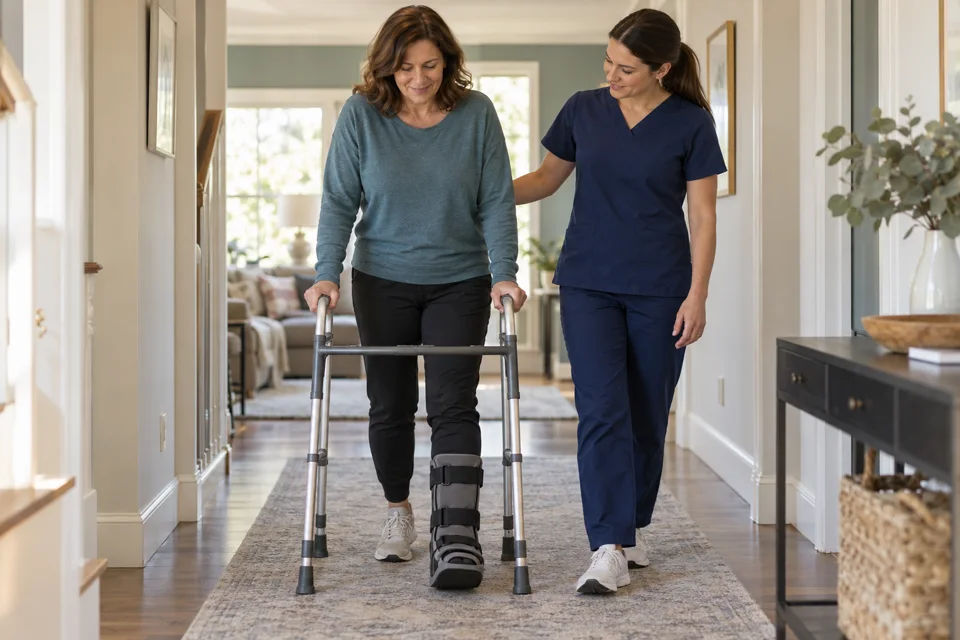
A fracture can change how you dress, get out of a chair or move through your home. The right rehabilitation plan depends on which bone was injured, how it was treated and the restrictions from your orthopedic clinician.
The restriction comes before the exercise
Weight-bearing, lifting and movement permissions differ across fractures and stages of healing. I review your instructions and coordinate questions with the treating team. Less pain, a removable brace or an elapsed number of weeks does not automatically mean the bone is ready for more load.
Protect the injury during everyday tasks
In a home visit, I can assess transfers, steps and the walking support you need. A wrist injury may affect your ability to push through a walker; a leg fracture may require a different transfer setup. We practice a version that respects the actual restriction rather than using one recovery routine for every fracture.
Build back as the plan allows
Movement, strength and balance work progress when permitted and according to your response. I also consider the strength and confidence lost during inactivity. Useful goals may include safer bathroom access, a manageable walking route or getting dressed with less difficulty.
Keep follow-up and fall prevention connected
Attend orthopedic follow-up and report new numbness, worsening pain or changes in the injured limb. If a fall caused the fracture, we can review balance and the home environment; ask your medical provider whether bone-health assessment is indicated. For wrist-specific guidance, see the existing broken-wrist article.
Discuss care at home with Dr. Lenny
I provide one-on-one physical therapy at home in Ivyland, Warminster and nearby communities in Bucks County, Montgomery County and Northeast Philadelphia. We can discuss your goals, location and whether this service fits your needs.
Call or text Dr. Lenny: 267-647-9097
General education; your exercise plan and medical restrictions should be based on an individual assessment.
Sources and further reading
Fracture-specific loading and movement restrictions come from the treating orthopedic team. When a low-trauma fracture, osteoporosis or fall risk is relevant, rehabilitation may also include bone-health and fall-risk assessment within the appropriate medical plan.