Dressing, reaching a shelf, exercising or getting comfortable at night can become harder when your shoulder hurts. I start with the task that limits you and assess what the shoulder can do today rather than treating every painful shoulder the same way.
Assess the shoulder and the whole movement
Shoulder symptoms can involve the rotator cuff, joint and other structures; neck-related symptoms can overlap. I ask about injury, weakness, night pain, activity demands and previous treatment, then examine movement and strength. A scan finding or “rotator cuff” label alone does not determine which exercise or load is appropriate.
Exercise is usually the foundation of nonsurgical rehabilitation
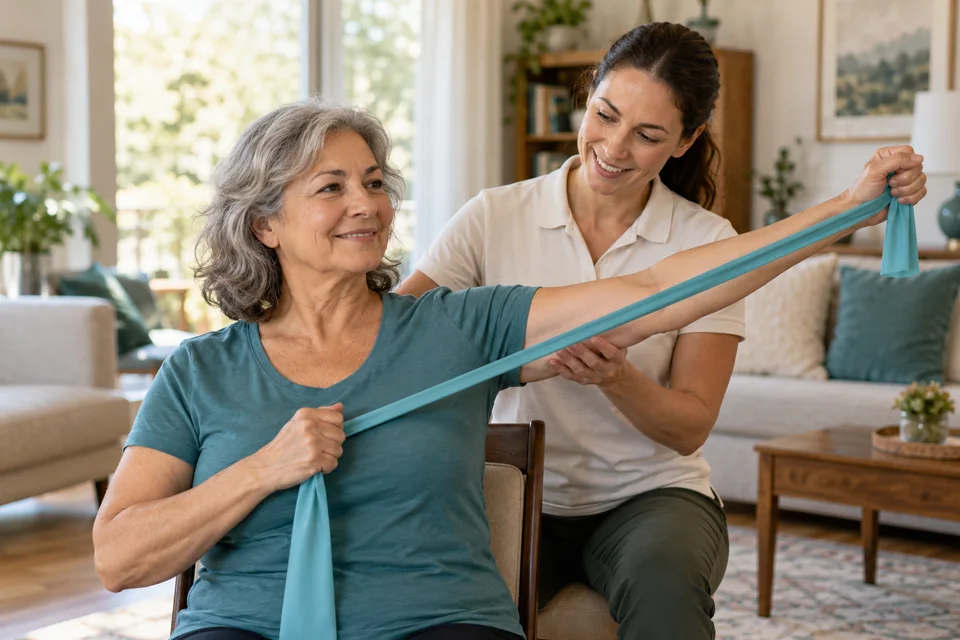
The 2025 rotator cuff tendinopathy clinical practice guideline supports active rehabilitation rather than relying only on passive treatment. Depending on the examination, that can include progressive resistance, motor-control or mobility exercise and a graded return to the activities that matter to you.
Make everyday tasks more manageable while rebuilding capacity
In your home, we can try a different reaching height, supported position or way to dress. These adjustments can reduce unnecessary aggravation while we progressively rebuild shoulder capacity. The goal is not indefinite avoidance of arm use.
Progress strength without guessing
I adjust range, support, resistance and volume to your response. Some discomfort during rehabilitation may be manageable, but substantial persistent worsening or loss of function should trigger reassessment. After a surgical repair or fracture, the surgeon’s restrictions take priority over a general exercise progression.
Keep the medical team involved when appropriate
Marked weakness after a sudden injury deserves medical assessment. Persistent severe night pain, progressive weakness or worsening function may warrant further evaluation. Chest discomfort with arm pain, breathlessness or sweating requires urgent medical help.
Research behind this article
This article reflects the 2025 JOSPT clinical practice guideline for diagnosis, nonsurgical medical care and rehabilitation of adults with rotator cuff tendinopathy, including return to function and sport. Exercise selection and progression should still be individualized.
Discuss care at home with Dr. Lenny
I provide one-on-one physical therapy at home in Ivyland, Warminster and nearby communities. Call or text Dr. Lenny: 267-647-9097.
General education; your exercise plan and medical restrictions should be based on an individual assessment.