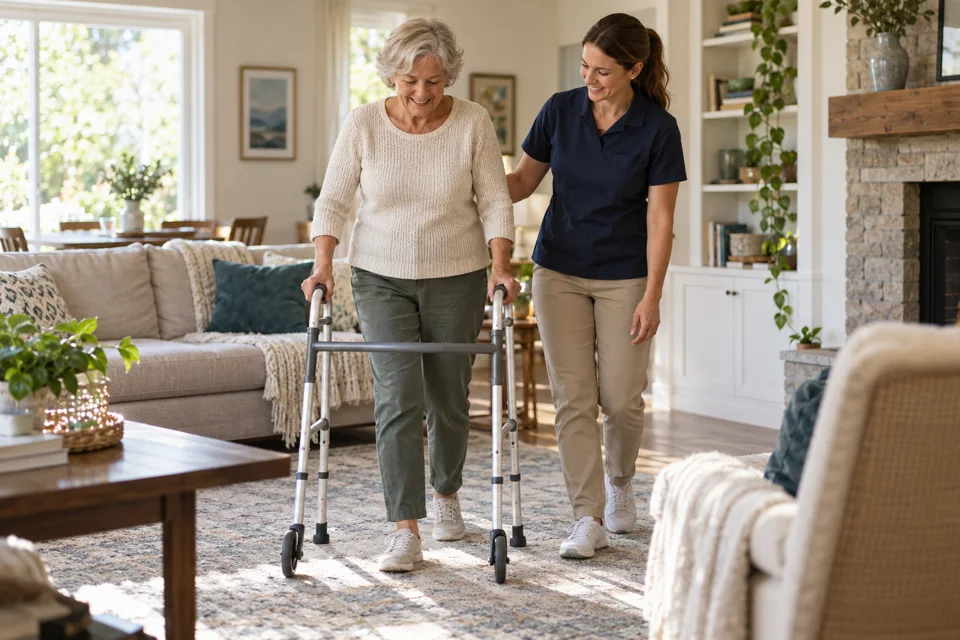
After hip or knee replacement, rehabilitation needs to work in the place where you get out of bed, use the bathroom, sit down and manage stairs. I bring one-on-one physical therapy to your home and build practice around those daily tasks.
Start with the surgical plan
Procedures, precautions and weight-bearing instructions can differ. I review the surgeon’s instructions, medical status and stage of recovery before choosing exercises. Do not assume a friend’s recovery routine or a general online video applies to your operation.
Early movement and strengthening have a purpose
Rehabilitation after joint replacement commonly includes progressive movement, strengthening, walking and functional training. After total knee replacement in particular, the updated 2026 APTA clinical practice guideline emphasizes evidence-based physical therapist management rather than a one-size-fits-all protocol. Exercise intensity, range, resistance and assistive-device progression should reflect the individual recovery.
Practice the route you actually use
We can assess chair height, bed transfers, bathroom access, steps and use of a walker or cane. Home-based practice can expose barriers that are easy to miss in a clinic and lets us train the tasks you need immediately.
Connect the home program to useful goals
I help you understand the assigned exercise amount and how to report changes in pain, swelling and walking. Goals may include easier chair rises, improved knee or hip function, a more comfortable household route or safer stairs. Recovery is individual; I do not promise a fixed date for walking without support.
Progress without racing the recovery
More exercise is not automatically better. I look for a manageable response and progress challenge as function improves. Significant setbacks, unexpected loss of function or concerns about the surgical site should be communicated rather than simply exercising harder.
Watch for changes that need medical attention
Follow your discharge instructions regarding wound changes, fever and new calf pain or swelling. Sudden shortness of breath or chest pain requires emergency help. Keep surgical follow-up appointments and discuss unexpected setbacks with your care team.
Research behind this article
For total knee arthroplasty, this article reflects the updated 2026 APTA clinical practice guideline for physical therapist management. Rehabilitation recommendations continue to be individualized to the procedure, medical status, functional needs and surgeon-specific restrictions. Hip replacement rehabilitation follows the same principle of procedure-specific, individualized progression rather than copying a generic protocol.
Discuss care at home with Dr. Lenny
I provide one-on-one physical therapy at home in Ivyland, Warminster and nearby communities. Call or text Dr. Lenny: 267-647-9097.
General education; your surgical instructions and individualized medical restrictions take priority.